
General3 min read
Wiki.js 3.0 Release
The stable release of Wiki.js v3 is now available!
The long awaited release of Wiki.js 3.0 is now available!
It’s a complete rewrite of both the backend and frontend, to address foundational issues in 2.x. This enables great new features like multi-sites, live collaboration, dynamic content blocks and proper high-availability.
Editors
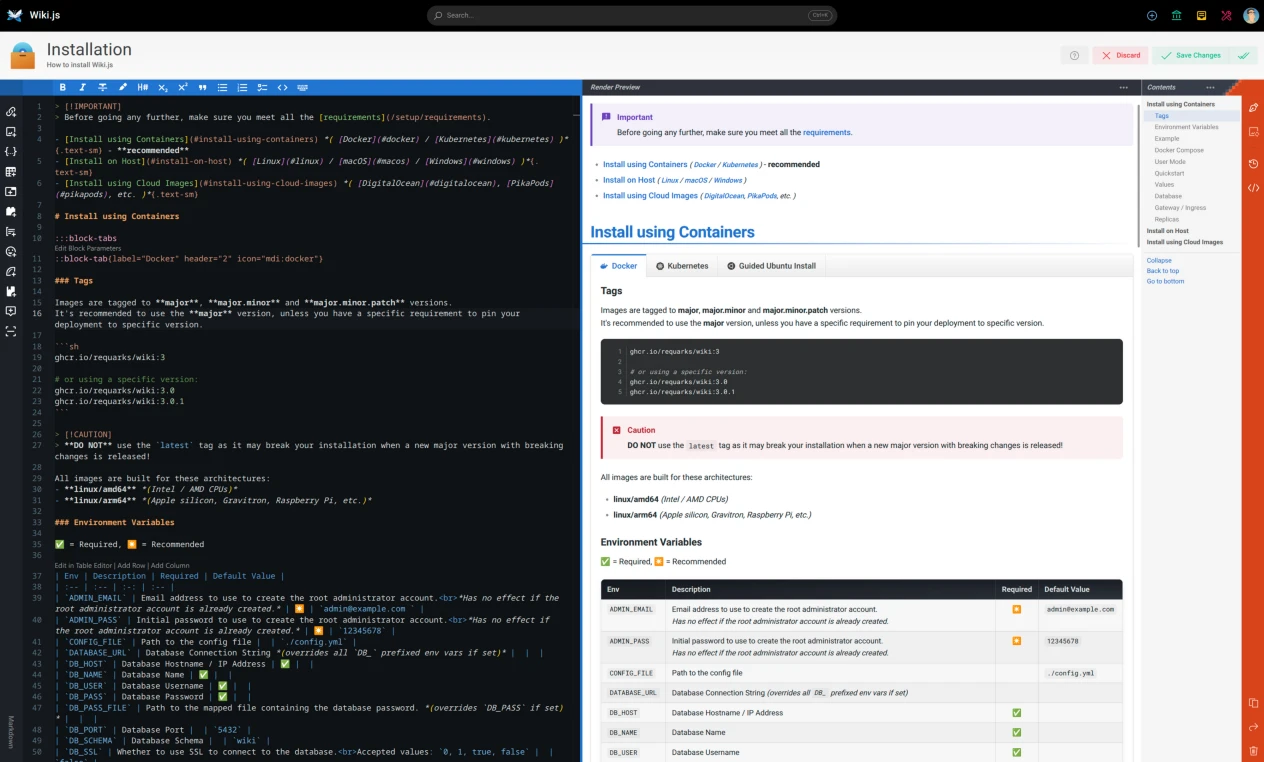
The Markdown editor (and the alternate AsciiDoc editor) is now using the Monaco engine (used in Visual Studio Code) with tons of new features and tools. The Visual editor is brand new and stores content as markdown behind the scene.
3.0 introduces some new page types:
- Drawing: Draw shapes, arrows and freehand using Excalidraw.
- Feedback Boards: Let your users submit ideas, upvote and comment on them.
- Blog: Create blog posts inside your wiki.
- Live Notes: The same experience as the Markdown editor but with a focus on collaborative note taking.
All editors (with the exception of the Feedback Boards and Blog) support live collaboration. See the cursors of other users and get their edits in real-time.
Content Blocks
Pages can now have dynamic content, called Content blocks. Whether it’s showing all pages in a folder, a diagram, an interactive map, image gallery, infobox, PDF viewer, spoiler box or include the contents of another page.
Wiki.js comes with over 25 built-in content blocks, which can be included in all 3 main editors (Markdown, Visual and AsciiDoc). You can also create your own custom blocks and make them available for use in your wikis.
You can view the full list in the docs.
File Manager
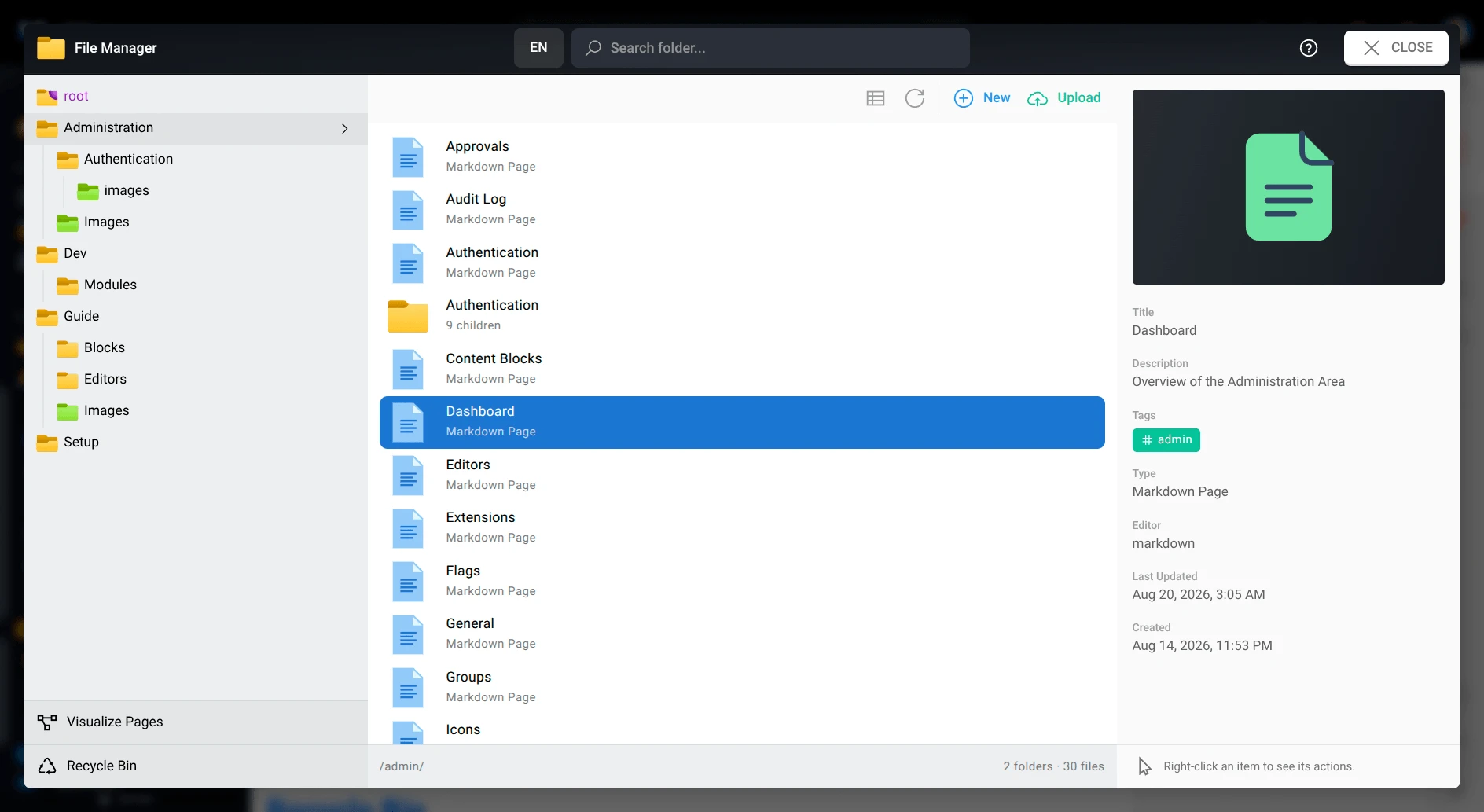
The File Manager introduces an easier way to manage pages and assets, from anywhere. Quickly browse, organize and search items.
Images can be edited (crop, resize, rotate, redact, adjust, etc.) in the Image editor for quick touch ups.
The Visualize Pages feature is back, but for all users this time. View all the pages you have access to and their relations to each other.
Finally, the Recycle Bin allows for pages to be restored in case of deletion.
Approvals / Lifecycle Rules
You can now define Approval rules to allow certain groups (even guests) to submit edits and have another group of users review them.
Pages can also have Lifecycle rules where certain actions occurs based on triggers. For example, you can display a stale banner on pages that haven’t been updated for 3 months and notify the page owners to review them.
Comments & Annotations
Pages now have a dedicated Talk tab where users can post comments and reply to existing ones. Annotations can also be added to specific sections / phrases of the article. Review them and resolve them as you go.
Multi-Site
A single instance of Wiki.js can now serve multiple wiki sites. Everything is scoped per site, apart from users and groups which are shared across the instance. This makes user management significantly easier where groups can define permissions for a specific or multiple sites at once.
Assign a hostname to each site and customize them with their own theme, storage, login, editors, etc. configurations.
And so, so much more…
This blog post barely scratches the surface of all the new features in Wiki.js 3.0. Check out the features page for a full breakdown.
Get Started
Read the requirements and installation guide to get started.
To upgrade from Wiki.js 2.x, follow the migration guide.
Ask questions on Discord and report any bugs on GitHub Discussions.